12 min read
Need it handled? Call (561) 400-0929
Water Damage Mold Inspection in West Palm Beach, FL: Coastal Air Assessments serves West Palm Beach and the surrounding area. Call (561) 400-0929 for a free estimate.
TL;DR
Mold can colonize within 24–48 hours after water damage in West Palm Beach's humid climate. Learn more about moisture intrusion inspection in West Palm Beach. A professional water damage mold inspection typically includes visual assessment, moisture mapping, air sampling, and a written report. Florida law requires your inspector to hold a separate state license (MRSA) and cannot also be the remediation contractor. File your insurance claim before remediation begins to protect coverage.
Why Water Damage Creates Mold Risk in West Palm Beach
Here's what happens in our community: a burst pipe, a roof leak, or a storm surge soaks your walls and flooring. Learn more about independent mold inspection report. Mold can begin growing within 24-48 hours after water damage in Florida's humid climate. That's not an exaggeration – it's the timeline the EPA and CDC both confirm for any environment where temperature exceeds 70°F and humidity levels regularly exceed 60%.
In West Palm Beach, we're there year-round. In Florida's climate, humidity levels regularly exceed 60%, and summer months push into the 80–82% range. That means the moment water intrudes – whether from a plumbing failure, AC condensate overflow, or a tropical storm – the clock starts ticking. Our subtropical climate is one of the most mold-friendly environments in the continental U.S.
The problem isn't just what you can see. Visible water damage often hides deeper moisture trapped behind drywall, under flooring, and inside wall cavities. That hidden moisture is where mold thrives, and floridahealth.gov's mold guidance confirms this, and it's why a professional inspection matters. You can't dry out what you can't see, and you can't remediate what you haven't documented.
Key Takeaway: In West Palm Beach's climate, mold growth after water damage is nearly inevitable without rapid drying and professional assessment. The 48–72 hour window is decisive – waiting longer means hidden colonies may already be established.
What Does a Water Damage Mold Inspection Include?
A certified mold inspection is not the same as mold remediation. Learn more about Commercial Building Mold Inspection West Palm Beach 2026. Learn more about mold assessment for an insurance claim. Inspection is assessment only – the inspector documents what's there, where it is, and how extensive it is. Remediation is the removal and cleanup work that comes after. This distinction matters legally and for your insurance claim.
Here's what a thorough post-water-damage inspection covers:
Visual Assessment and Moisture Mapping
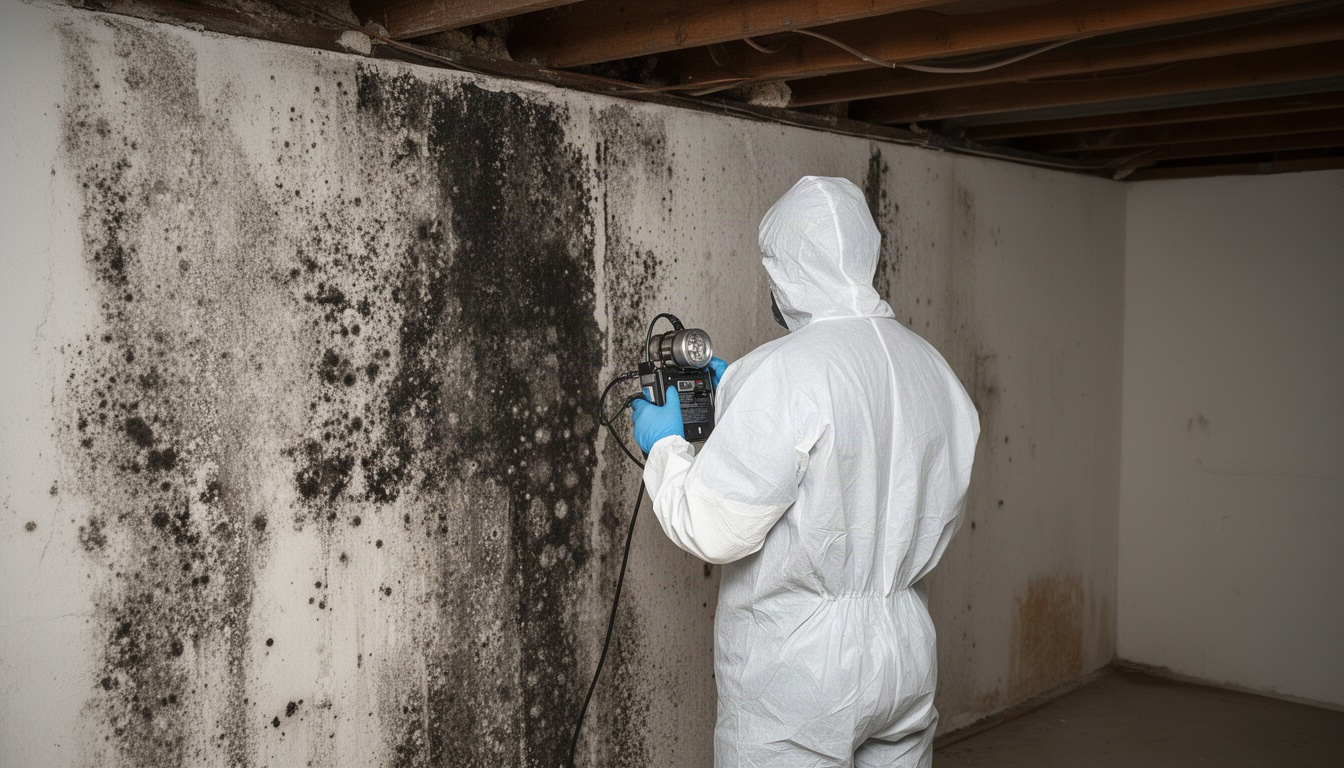
The inspector starts with a walk-through, looking for visible mold, water stains, discoloration, and soft spots in drywall or flooring. They use a moisture meter to measure moisture content in building materials – wood, drywall, concrete – at multiple locations. This step identifies areas that look dry but are still wet inside. Thermal imaging (infrared cameras) reveals temperature differentials caused by hidden moisture behind walls and under flooring, catching problems that a visual inspection alone would miss.
Air Sampling and Surface Testing
The inspector collects air samples using spore traps – small devices that pull air through a collection medium for 5–10 minutes. These samples are sent to an accredited laboratory for analysis, such as emsl's certified testing services. Surface samples (swabs or tape lifts) are taken from suspected mold areas. The lab counts spore types and concentrations, comparing indoor levels to outdoor baseline levels. This data tells you whether mold is present, what species it is, and whether indoor levels are elevated.
The written report documents all findings: moisture readings, sample locations, lab results, and a professional assessment of whether conditions support active mold growth or remediation need. This report is your paper trail for insurance claims and legal documentation.
How Much Does a Mold Inspection Cost After Water Damage in West Palm Beach?
Pricing varies based on property size, the number of samples, and whether the inspector includes thermal imaging. Here's what you're typically looking at:
- Basic visual inspection only: $150–$300
- Air sampling (per sample): $75–$150 per sample
- Surface swab or tape-lift sampling: $50–$100 per sample
- Thermal imaging add-on: $100–$200
- Full post-water-damage assessment (visual + moisture mapping + 3 air samples + 2 surface swabs + written report): According to West Palm Beach mold remediation pricing examples, local mold inspection and testing commonly around $349 to $499, with some providers listing starting prices near $398. For more details, see mold assessment options in West Palm Beach. For more details, see Moisture Intrusion Inspection West Palm Beach Home (2026).
Real example: An 1,800 sq ft West Palm Beach home with an AC leak. The inspector performs a visual assessment, moisture mapping with a meter, collects 3 air samples from different rooms, takes 2 surface swabs from visibly affected areas, and includes a written report with lab analysis. Total cost is typically in the range of professional assessments in the region.
Lab fees are often included in the inspection quote, but confirm this upfront. Some inspectors charge separately for rush turnaround (same-day results cost more than standard 24–48 hour processing).
Insurance reimbursement: Inspection costs may be reimbursable under your homeowner's policy if the water damage stems from a sudden, accidental event (burst pipe, storm damage). Gradual leaks are typically excluded. File your claim before the inspection or remediation begins – this protects your coverage and ensures the insurer can send their own adjuster if needed.
How to Choose a Certified Mold Inspector Near West Palm Beach
Not all inspectors are created equal. Florida law sets specific licensing requirements, and there are red flags that signal a conflict of interest.
Florida licensing requirement: It is required by the state of Florida to hire a mold assessor before a mold remediation company performs any work. Any mold assessor in Florida must hold a state MRSA (Mold Remediation Supervisor – Assessment) license issued by the Florida Department of Business and Professional Regulation (DBPR). Learn more about mold assessment for legal documentation. You can verify this license online at the DBPR licensee search portal. If an inspector can't produce a current MRSA license, they're operating illegally.
Critical red flag – conflict of interest: Florida law (F.S. §468.8424) explicitly prohibits the same company from acting as both the mold assessor and the mold remediator on the same project. If a contractor offers to inspect and remediate, they have a financial incentive to find mold and recommend expensive removal. An independent assessor has no stake in the remediation outcome, which is why keeping these roles separate is essential – they're documenting facts, not selling a solution.
Additional credentials to look for:
- IICRC AMRT (Applied Microbial Remediation Technician) certification
- CMI (Certified Mold Inspector) or CMRS (Certified Mold Remediation Supervisor) credentials
- Membership in professional organizations like AIHA (American Industrial Hygiene Association)
Questions to ask before hiring:
- Are you licensed as an MRSA by the Florida DBPR? (Ask for license number and verify it.)
- Do you perform mold remediation, or only assessment? (Answer should be "only assessment.")
- Which laboratory do you use for air and surface sample analysis? (Confirm it's AIHA EMLAP-accredited – this ensures legally defensible results.)
- What's included in your written report? (Should include moisture readings, sample locations, lab results, and professional assessment.)
- How long until I receive lab results? (Standard is 24–48 hours; confirm this upfront.)
Local providers like Coastal Air Assessments demonstrate what to look for: they hold Florida MRSA licenses, operate independently from remediation contractors, and use accredited laboratories for analysis. Their reports are defensible for insurance claims and legal proceedings.
If you'd rather not start your search from scratch, Coastal Air Assessments serves West Palm Beach and handles work like this regularly — happy to answer your questions and walk you through the options on the first call.
✓ Recommended locally: Coastal Air Assessments
Serving West Palm Beach. Call (561) 400-0929 or get in touch »
Does Your Homeowner's Insurance Cover Mold Inspection After Water Damage?
The answer depends on what caused the water damage.
Sudden and accidental water damage is typically covered under an HO-3 homeowner's policy. Standard HO-3 policies — the most common homeowners policy in Florida — cover water damage that happens unexpectedly, such as a burst pipe, an overflowing washing machine, or an air conditioner that malfunctions and releases water into the walls. Mold resulting from these events is usually covered up to your policy's mold limit. Many Florida policies also include mold coverage caps, often ranging from $5,000–$10,000, even when mold is covered.
Gradual leaks, flooding, and lack of maintenance are typically excluded. If water damage stems from a slow roof leak you ignored for months or from a plumbing issue you didn't maintain, the insurer will likely deny the claim.
The critical sequence: Report the water damage to your insurer immediately. Request an inspection before you begin any cleanup or remediation. The insurer may send their own adjuster. A professional mold assessment report – from an independent assessor, not a remediation contractor – documents the extent of the problem and supports your claim.
Florida's Assignment of Benefits (AOB) reform: As of January 1, 2023, Florida law (SB 2-D) eliminated Assignment of Benefits for property insurance claims. This means you cannot sign over your insurance rights to a contractor. You must file the claim directly with your insurer and manage the process yourself. This actually protects you – it prevents contractors from inflating repair estimates or pressuring you into unnecessary work.
Timeline matters: If you file a claim after remediation is already underway, the insurer may argue you didn't mitigate damages properly. File first, document second, remediate third.
Finding Reliable Water Damage Mold Inspection in West Palm Beach
When you're facing water damage, you need an inspector who understands our local climate, knows Florida's licensing rules, and will give you an honest, independent assessment.
What to look for:
- Florida MRSA license (verified through DBPR)
- No financial stake in remediation (independent assessor only)
- AIHA EMLAP-accredited laboratory for sample analysis
- Written report with clear findings and professional recommendations
- Transparent pricing upfront
Coastal Air Assessments operates throughout West Palm Beach and Palm Beach County, offering licensed mold assessment, moisture intrusion inspection, and IAQ testing. They provide independent reports suitable for insurance claims and legal documentation. You can reach them at (561) 400-0929 or visit their website to learn more about their assessment process and scheduling.
The key is moving fast. In our climate, the 48–72 hour window after water damage is when mold colonization accelerates. An inspection booked Wednesday after a Monday water event can yield lab results by Friday, giving you actionable documentation for your insurance claim and remediation decisions.
Recommended Mold Assessment in West Palm Beach: Coastal Air Assessments
Ready to talk to a real local option? Coastal Air Assessments works with customers across West Palm Beach from first question to finished job, with pricing and next steps laid out up front.
FAQ: Water Damage Mold Inspection Near West Palm Beach
How soon after water damage should I get a mold inspection in West Palm Beach?
Direct Answer: Within 24–48 hours of discovering water damage. Learn more about Real Estate Mold Inspection West Palm Beach (2026). Learn more about property manager mold inspection responsibilities. Learn more about mold inspection for a home purchase in West Palm Beach. Mold colonization begins rapidly in our humid climate, and early documentation protects your insurance claim.
The EPA says to dry water-damaged areas and items within 24 to 48 hours to prevent mold. In West Palm Beach, where humidity levels regularly exceed 60%, this timeline is critical. If you wait a week, hidden mold colonies may already be established behind walls and under flooring. An early inspection captures the damage while it's still fresh and documents the extent for your insurer.
How much does a mold inspection cost after water damage near West Palm Beach?
Direct Answer: A full post-water-damage mold inspection typically includes visual assessment, moisture mapping, air and surface sampling, and a written report for a standard residential property.
Costs vary by property size and the number of samples collected. Basic visual inspection alone runs $150–$300. Each air sample adds $75–$150, and surface swabs add $50–$100 each. Lab fees are usually included. Confirm whether lab fees and thermal imaging are included in the quote.
Can I inspect for mold myself instead of hiring a professional?
Direct Answer: Visual inspection for obvious mold is possible, but professional assessment is essential after water damage because mold often hides behind walls and under flooring where you can't see it.
You can look for visible mold, water stains, and soft spots in drywall. But moisture meters, thermal imaging, air sampling, and laboratory analysis require professional equipment and training. More importantly, a professional report from a licensed assessor is defensible for insurance claims and legal proceedings. A DIY assessment won't satisfy your insurer or hold up in court.
What is the difference between a mold inspection and mold remediation?
Direct Answer: Inspection is assessment only – documenting what mold is present and where. Remediation is the removal and cleanup work. Florida law requires these to be performed by separate, independent companies to avoid conflicts of interest.
An inspector identifies and documents the problem. A remediator fixes it. If the same company does both, they have a financial incentive to find mold and recommend expensive removal. An independent inspector has no stake in the remediation outcome – they're reporting facts. Always hire an assessor first, get a written report, then hire a separate remediation contractor if needed.
Will my homeowner's insurance pay for a mold inspection after water damage?
Direct Answer: Inspection costs may be reimbursable if the water damage stems from a sudden, accidental event (burst pipe, storm damage). Gradual leaks are typically excluded. File your claim before remediation begins.
Most HO-3 policies cover mold resulting from sudden and accidental water damage. Inspection costs are often reimbursable as part of the loss. However, if you begin remediation before filing a claim, the insurer may deny coverage, arguing you didn't mitigate damages properly. Report the damage immediately, request an inspection, file the claim, then proceed with remediation.
How long does a water damage mold inspection take?
Direct Answer: The on-site inspection typically takes 1–3 hours depending on property size. Lab results for air and surface samples return in 24–48 hours. Total turnaround from inspection to written report is usually 3–5 business days.
The inspector spends time on visual assessment, moisture mapping, collecting samples, and documenting findings. The samples are then sent to an accredited laboratory for analysis. Standard lab turnaround is 24–48 hours. The inspector compiles results into a written report, which you receive within a few days. Rush same-day lab service is available at additional cost.
What certifications should a mold inspector have in Florida?
Direct Answer: Florida law requires an MRSA (Mold Remediation Supervisor – Assessment) license from the DBPR. Additional credentials include IICRC AMRT (Applied Microbial Remediation Technician) and CMI (Certified Mold Inspector).
Verify the MRSA license through the Florida DBPR licensee search portal – this is non-negotiable. The IICRC AMRT certification demonstrates training in water damage restoration and mold remediation standards. CMI credentials show specialized mold inspection training. An inspector with MRSA + IICRC AMRT + membership in AIHA represents the gold standard for West Palm Beach.
Next Steps: Get Your Water Damage Mold Inspection Scheduled
If you've experienced water damage in West Palm Beach, don't wait. Mold grows fast in our climate, and documentation is critical for insurance claims and remediation decisions.
Here's what to do:
- Report the water damage to your homeowner's insurer immediately. Document the date and cause.
- Schedule a professional mold inspection within 24–48 hours. Verify the inspector holds a current Florida MRSA license.
- Request a written report with lab analysis. Confirm the laboratory is AIHA EMLAP-accredited.
- File your insurance claim before remediation begins. Attach the inspection report as documentation.
- Use the report to guide remediation decisions. Hire a separate, licensed remediation contractor if needed.
Coastal Air Assessments provides independent mold assessment and moisture intrusion inspection throughout West Palm Beach and Palm Beach County. They're licensed, use accredited laboratories, and deliver reports suitable for insurance claims and legal documentation. Call (561) 400-0929 to schedule your inspection or visit their website to learn more.
The sooner you act, the sooner you'll have answers and a clear path forward.
Ready to Get Started?
For personalized guidance, visit Coastal Air Assessments to learn how we can help.
More from Coastal Air Assessments: Coastal Air Assessments · Government Building Air Quality Testing West Palm Beach (202