11 min read
Need it handled? Call (561) 400-0929
Hire Mold Inspector in West Palm Beach, FL: Coastal Air Assessments serves West Palm Beach and surrounding areas including Palm Beach County, Broward County, and Martin County. Call (561) 400-0929 for a free estimate.
TL;DR: Hiring a qualified mold inspector in West Palm Beach requires verifying a Florida state Mold Assessor license (MRSA prefix), checking for third-party certifications like CMIA or CIH, and ensuring the inspector doesn't also perform remediation – a conflict of interest prohibited by Florida law. Expect to pay $200–$600 for a standard residential inspection, with air sampling adding $30–$75 per sample plus lab fees. Always request a written report and compare at least two quotes before booking.
What Does a Mold Inspector Actually Do?
When you're looking to hire a mold inspector near you, it helps to understand exactly what that role entails – and how it differs from mold testing and remediation, two services often confused with inspection. For more details, see professional mold inspection costs.
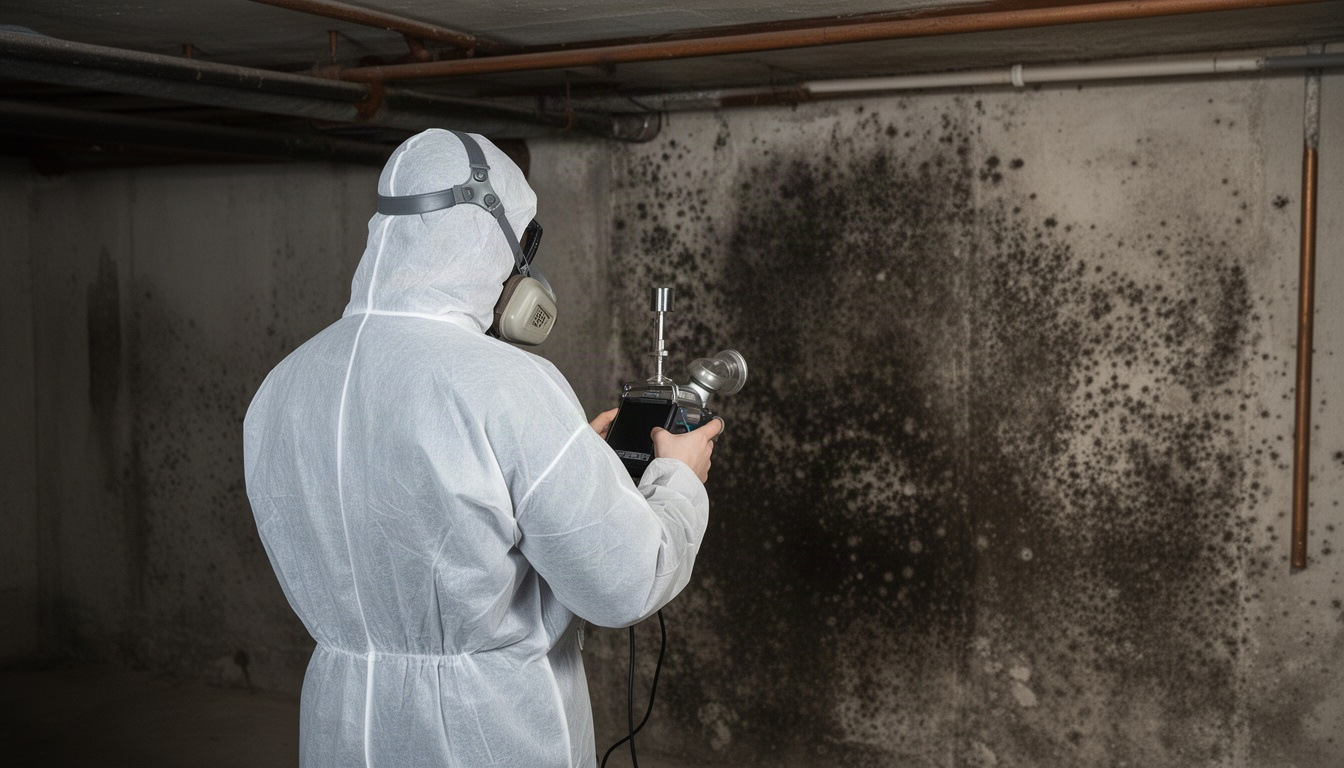
A mold inspection is a visual and physical assessment of your property for signs of mold growth, moisture intrusion, and conditions that support mold development. The inspector walks through your home or building, checks for visible mold, uses moisture-detection equipment, and identifies problem areas. If needed, they collect air or surface samples that get sent to an accredited laboratory for analysis. The result is a written report documenting findings and, if mold is present, a recommended remediation approach.
Mold testing, by contrast, is the laboratory analysis of samples collected during an inspection. Inspection and testing often happen together, but they're technically separate services. Remediation is the actual cleanup and repair work – something an inspector should never perform on the same project.
This separation matters enormously here in West Palm Beach. Florida Statute §468.8425 explicitly prohibits a licensed Mold Assessor from also performing remediation on the same building. This legal firewall protects you from conflicts of interest: an inspector who profits from finding mold has no incentive to give you an unbiased assessment. The EPA recommends this separation nationwide, but Florida has made it law.
When you hire an inspector, you're paying for their expertise and independence – not a sales pitch for a $5,000 remediation job they also happen to offer. That's what separates a qualified professional mold inspection from a bait-and-switch.
What Credentials Should a Mold Inspector Have?
Here in West Palm Beach, the baseline credential is non-negotiable: a Florida state Mold Assessor license issued by the Department of Business and Professional Regulation (DBPR). Learn more about independent mold inspection report. Any inspector operating without one is breaking the law. You can verify this license on DBPR's online database by searching the inspector's name or license number (prefix MRSA).
Beyond the state license, several third-party certifications signal deeper expertise:
| Credential | Issuing Body | What It Means |
|---|---|---|
| CMIA (Council-certified Microbial Investigator) | ACAC | Demonstrates competence in mold, bacteria, and biological agents; requires coursework, experience hours, exam, and continuing education. |
| CMI (Certified Mold Inspector) | NORMI | Industry certification covering visual assessment, sampling protocols, and report writing; requires field experience and proctored exam. |
| CIH (Certified Industrial Hygienist) | ABIH | Gold-standard credential for environmental professionals; requires a bachelor's degree, documented practice, and comprehensive exam. Most relevant for complex or legal-dispute cases. |
| CIEC (Certified Indoor Environmental Consultant) | ACAC | Broader credential covering mold, moisture, and indoor air quality; useful for comprehensive assessments. |
Before hiring, request documentation of these credentials. A legitimate inspector will provide copies without hesitation. Here's a quick checklist:
- Active Florida Mold Assessor license (MRSA) – verify on DBPR's website
- At least one third-party certification (CMIA, CMI, or CIH preferred)
- Proof of liability insurance
- References from recent inspections
- Sample written report showing scope, findings, and recommendations
A critical red flag: anyone calling themselves a "mold inspector" without a Florida state license. The title isn't protected in many states, but in Florida, it is. If they can't produce an MRSA license, they're not qualified to work here.
How Much Does Hiring a Mold Inspector Cost?
Direct answer: Standard residential mold inspections in West Palm Beach typically run $200–$600, with air sampling adding $30–$75 per sample plus lab fees. For more details, see Water Damage Mold Inspection Near West Palm Beach 2026.
Here's how costs break down:
| Service | Typical Cost |
|---|---|
| Visual inspection only (no sampling) | $200–$400 |
| Inspection + 1–2 air samples | $300–$450 |
| Inspection + 3 air samples + surface sampling | $400–$600 |
| Lab analysis (per sample, standard 5–7 day turnaround) | $25–$75 |
| Rush lab turnaround (24–48 hours) | Add $20–$40 per sample |
| Post-remediation clearance testing | $200–$400 |
Real example: A 2,000 sq ft home in West Palm Beach with suspected mold in the attic and basement. The inspector performs a visual assessment, collects 3 air samples (one from each problem area, one from a clean baseline), and sends them to the lab with standard 5–7 day turnaround. Total: roughly $350–$500.
What drives costs up? Square footage (larger homes take longer), number of samples (more samples = higher lab fees), lab turnaround time (rush testing costs extra), and whether you need post-remediation verification testing. Some inspectors charge a flat rate; others bill hourly. Always ask upfront.
Watch for the bait-and-switch: an inspector quotes $99 for the inspection, then immediately recommends a $4,000 remediation job they also perform. That's a red flag. A qualified, independent inspector gives you findings and options – not a sales pitch.
If you'd rather not start your search from scratch, Coastal Air Assessments serves West Palm Beach and handles work like this regularly — happy to answer your questions and walk you through the options on the first call.
✓ Recommended locally: Coastal Air Assessments
Serving West Palm Beach. Call (561) 400-0929 or get in touch »
How Do You Find and Vet a Qualified Mold Inspector Near You?
Finding a qualified mold inspector near you involves a straightforward process. Learn more about mold assessment before buying a home. Here's how to do it right:
Step 1: Search Trusted Directories
Start with the ACAC (American Council for Accredited Certification) inspector locator tool, which lets you search by state and ZIP code. Cross-reference results with the AIHA member directory and your state's contractor licensing board. These directories filter for credentialed professionals, not just anyone with a website.
Step 2: Verify License and Credentials
Once you have a name, verify their Florida Mold Assessor license on DBPR's online database. Request copies of their CMIA, CMI, or CIH certification. Ask how long they've held their license and whether they've had any disciplinary actions (DBPR's database shows this too). A legitimate inspector welcomes these questions.
Step 3: Check Reviews and References
Ask for references from recent inspections – ideally from homebuyers, renters, or property managers in West Palm Beach or nearby areas. Read online reviews, but remember that directory sites like Thumbtack's local listings show availability, not necessarily quality. Look for patterns: Do reviewers mention clear communication? Written reports? Fair pricing?
Step 4: Request a Sample Report
Ask the inspector to share a redacted sample report from a previous job. A professional report includes the scope of work, locations inspected, findings (with photos), lab results if sampling was done, and a clear remediation protocol if mold was found. If they won't share a sample, that's a red flag.
Step 5: Ask the Conflict-of-Interest Question
Before booking, ask directly: "Do you perform mold remediation?" The answer should be no. If they say yes, ask if they do it on the same projects where they inspect. If yes again, move on. Florida law prohibits this, and it creates an obvious bias.
Step 6: Compare 2–3 Quotes
Get written quotes from at least two inspectors. Compare scope (what's included?), timeline (how long until you get results?), and cost. The cheapest option isn't always the best; the most expensive isn't always the most thorough. Look for consistency and clarity.
Green Flags vs. Red Flags
| Green Flags | Red Flags |
|---|---|
| Verifiable FL Mold Assessor license (MRSA) | No state license or can't verify it |
| Third-party certification (CMIA, CMI, CIH) | "Certified" but won't provide proof |
| Does NOT perform remediation | Also offers remediation on same projects |
| Provides written report with photos | Verbal findings only; no documentation |
| Clear, itemized quote | Vague pricing or pressure to decide immediately |
| References available | No references or won't share them |
| Explains what they'll do and why | Pushes expensive testing you don't need |
| Liability insurance on file | No insurance or won't disclose it |
Timing Matters for Home Buyers
If you're buying a home in West Palm Beach, include a mold inspection contingency in your purchase contract during the standard inspection period (typically 10–15 days). Schedule the inspection early – don't wait until day 14. This gives you time to review the report, ask follow-up questions, and decide whether to renegotiate, request remediation, or walk away. A professional inspector can often accommodate same-week appointments.
When Should You Hire a Mold Inspector?
Mold inspections aren't one-size-fits-all. Different situations call for inspection at different times:
After water damage or flooding: If your West Palm Beach home has experienced a pipe burst, roof leak, or storm flooding, hire an inspector within 24–48 hours. Mold can begin growing on wet surfaces within that timeframe, and early detection prevents costly remediation later. This is especially critical in our flood-prone areas.
Before buying a home: Schedule an inspection during your inspection contingency period. This protects you from inheriting a hidden mold problem and gives you leverage to negotiate repairs or credits.
Musty odors with no visible source: If your home smells like mold but you can't see it, an inspector can use moisture mapping and thermal imaging air sampling to locate hidden growth – often in attics, crawl spaces, or behind walls.
After failed remediation: If a contractor claims they've cleaned up mold but the smell persists or you're skeptical about their work, hire an independent inspector for post-remediation verification testing. Florida law requires this to be done by a separate licensed assessor, not the remediator.
Landlord-tenant disputes: If a renter claims mold is making them sick or a landlord disputes whether mold exists, a professional inspection report provides objective documentation for resolution or legal proceedings.
Insurance claims: If you're filing a mold-damage claim with your homeowners insurance, an independent inspection report strengthens your case and provides the documentation insurers need to process the claim.
Finding Reliable Mold Inspection in West Palm Beach
When you're ready to hire a mold inspector near you here in West Palm Beach, local providers who understand our specific climate and building challenges make a real difference. West Palm Beach's tropical climate with year-round humidity and frequent tropical storms creates ideal conditions for mold growth that inspectors familiar with South Florida know how to identify and document.
Coastal Air Assessments is a licensed mold assessment provider serving West Palm Beach and Palm Beach County. They offer independent mold inspections, clearance testing (post-remediation verification), and indoor air quality assessments with written reports suitable for real estate transactions, insurance claims, and legal disputes. Their inspectors hold Florida state licenses and use accredited laboratories for sample analysis. You can reach them at (561) 400-0929 or visit their website to learn more about their services and request a free phone evaluation.
When evaluating any local inspector – whether Coastal Air Assessments or another provider – verify their credentials, confirm they don't perform remediation, and request a sample report. The goal is an unbiased, professional assessment you can trust.
Recommended Mold Assessment: Coastal Air Assessments
Ready to talk to a real local option? Coastal Air Assessments works with customers across West Palm Beach from first question to finished job, with pricing and next steps laid out up front.
Frequently Asked Questions
What is the difference between a mold inspection and mold testing?
Direct Answer: Mold inspection is a visual and physical assessment of your property for mold growth and moisture problems. Mold testing is the laboratory analysis of samples collected during an inspection.
An inspector walks through your home, checks for visible mold, uses moisture-detection equipment, and identifies problem areas. If needed, they collect air or surface samples. Those samples are then sent to an accredited laboratory for analysis – that's the testing phase. Inspection and testing often happen together, but they're technically separate services. The EPA notes that visual inspection is often sufficient for obvious mold growth; testing is most useful when mold is suspected but not visible.
How do I know if a mold inspector is certified and legitimate?
Direct Answer: Verify their Florida Mold Assessor license (MRSA prefix) on DBPR's online database, and request proof of third-party certifications like CMIA, CMI, or CIH.
A legitimate inspector will provide copies of their credentials without hesitation. Check that their state license is active and in good standing. Ask for references from recent inspections and a sample written report. Be wary of anyone who can't produce a Florida state license – it's required by law to perform mold assessment in West Palm Beach.
Can the same company do mold inspection and mold remediation?
Direct Answer: No. Florida Statute §468.8425 explicitly prohibits a licensed Mold Assessor from performing remediation on the same project. This is a legal conflict-of-interest protection.
An inspector who also profits from finding mold has an incentive to recommend unnecessary or excessive remediation. Hiring separate companies – one to inspect and assess, another to remediate if needed – ensures you get an unbiased report. Always ask an inspector directly: "Do you perform mold remediation?" If the answer is yes, find a different inspector.
How long does a mold inspection take?
Direct Answer: A typical residential mold inspection takes 1–3 hours, depending on home size and complexity. You'll receive preliminary findings on-site; a detailed written report usually arrives within 5–7 business days.
A 2,000 sq ft home with straightforward inspection usually takes 1–2 hours. Larger homes, multiple problem areas, or extensive sampling can take 3+ hours. The inspector will collect samples (if needed) and send them to the lab. Standard lab turnaround is 5–7 days; rush results (24–48 hours) cost extra. The final written report is what you'll use for insurance claims, real estate transactions, or remediation planning.
How much does a mold inspector cost near me?
Direct Answer: Standard residential mold inspections in West Palm Beach range from $200–$600, depending on home size and whether air or surface sampling is included. Lab fees typically add $25–$75 per sample.
Costs vary based on the scope of work. A visual inspection alone (no sampling) might run $200–$400. If you need 3 air samples plus lab analysis with standard turnaround, expect $400–$550. Rush lab results (24–48 hours) add $20–$40 per sample. Always ask for a written quote before booking, and compare at least two inspectors to ensure fair pricing.
Will my homeowners insurance cover a mold inspection?
Direct Answer: Most homeowners insurance policies do not cover mold inspection costs unless the mold results from a sudden, covered peril (like a burst pipe). Gradual moisture damage is typically excluded.
However, if mold results from a covered water damage claim – say, a sudden pipe burst or storm damage – your insurer may cover the inspection as part of the claim investigation. Always contact your insurance company before hiring an inspector and ask whether the inspection is covered. If it's not, the cost is usually a tax-deductible home maintenance expense. A professional inspection report is critical if you do file a mold-related claim; it provides the documentation insurers need to process it fairly.
Next Steps: Get Your Mold Inspection Scheduled
If you suspect mold in your West Palm Beach home or are buying a property and want peace of mind, don't delay. Mold grows quickly in our humid climate, and early detection prevents costly problems down the road.
Start by verifying a few local inspectors' credentials on DBPR's website, request written quotes, and ask the conflict-of-interest question. Schedule your inspection during your inspection contingency period if you're buying, or within 24–48 hours if you've had water damage.
Ready to move forward? Call a qualified local inspector today or request a free phone evaluation to discuss your specific situation. A professional mold assessment is an investment in your home's health and your family's safety.
Ready to Get Started?
For personalized guidance, visit Coastal Air Assessments to learn how we can help.
More from Coastal Air Assessments: Coastal Air Assessments