16 min read
Need it handled? Call (561) 400-0929
Mold Litigation Expert Testing in West Palm Beach, FL: Coastal Air Assessments serves West Palm Beach and the surrounding area. Call (561) 400-0929 for a free estimate.
TL;DR: Mold litigation expert testing in West Palm Beach requires Florida-licensed assessors who follow chain-of-custody protocols and use AIHA-accredited labs — standard contractor inspections won't hold up in court. Legally defensible data must be collected by accredited professionals following established industry standards, such as those from the IICRC and AIHA, with rigorous chain-of-custody protocols and analysis by accredited laboratories to ensure results are objective and scientifically sound. Expect $450–$1,200 for assessment and sampling, plus $150–$350/hour for expert witness fees. Florida's Daubert standard (adopted 2019) means your expert must demonstrate peer-reviewed methodology and known error rates to be admissible.
What Is Mold Litigation Expert Testing?
Mold litigation expert testing is a forensic-grade assessment designed specifically to withstand courtroom scrutiny. Learn more about mold assessment for legal documentation. Unlike a standard mold inspection – which a property owner or contractor might order for remediation planning – litigation testing produces a defensible, chain-of-custody-documented report that meets Florida's evidentiary standards for expert testimony.
The core difference lies in independence and methodology. A contractor who both inspects and remediates the same property has a financial conflict of interest that immediately undermines credibility in court. Florida Statute §468.84 explicitly prohibits this dual role, as wlawpi's Florida mold exposure guide notes,. Litigation testing, by contrast, is performed by a licensed Mold-Related Services Assessor (MRSA) who has no remediation stake in the outcome.
Here in West Palm Beach, property owners, tenants, real estate buyers, insurance companies, and their attorneys order this type of testing when a mold dispute is likely to end up in litigation – whether that's a construction defect claim, a landlord-tenant dispute, an insurance bad faith case, or a post-purchase property transaction gone wrong. According to Toxic Mold Claims in Florida – The Mold Lawyers, Palm Beach County cases follow the same legal framework, according to themold.lawyer's case overview, as Broward and Miami-Dade, meaning the evidentiary bar is equally high across South Florida. The report becomes evidence: it documents what mold is present, where it is, how much of it, and whether indoor levels exceed outdoor baseline levels (a critical comparison in our humid South Florida climate).
Key Takeaway: Litigation testing is not about finding mold – it's about proving what's there in a way a judge or jury will accept.
Why Does Mold Testing Need to Meet Litigation Standards in Florida?
Florida courts have adopted the Daubert standard for expert testimony, a federal framework that requires experts to demonstrate their methodology is reliable, peer-reviewed, and generally accepted in the relevant scientific community. Learn more about expert witness mold assessor in West Palm Beach. This shift, codified in Florida Statute §90.702 and adopted via HB 7 in 2019, as silvasilva.com's toxic torts attorneys discuss, replaced the older Frye standard and raised the bar significantly for what counts as admissible expert evidence.
Under Daubert, a mold expert's report must show:
- The testing method has been peer-reviewed and published
- Known error rates exist and are documented
- The methodology is generally accepted among qualified professionals
- The expert reliably applied the method to the facts of this case
A contractor's standard mold inspection – often a visual walkthrough with a few air samples sent to a non-accredited lab – fails on multiple counts. The lab may not be AIHA-accredited (EMLAP), the sampling protocol may not be documented, and there's no chain of custody. When the defense attorney cross-examines the contractor in a deposition, these gaps become fatal to the plaintiff's case.
Florida also has specific licensing requirements. Under Florida Statute §468.8411–468.8424, anyone performing mold assessment in Florida must hold a current Mold-Related Services Assessor (MRSA) license from the Florida Department of Business & Professional Regulation (DBPR). You can verify this license status at myfloridalicense.com under "Mold Related Services." An assessor who also performs remediation on the same project violates state law and creates an immediate credibility problem – the expert is financially motivated to find (or not find) mold.
Additionally, if your case involves a construction defect, Florida's Chapter 558 pre-suit notice requirement means you must serve written notice on the contractor before filing suit, giving them an opportunity to inspect. Your litigation-grade mold report becomes the evidence that preserves your position before that notice goes out.
Key Takeaway: Florida courts now require mold experts to prove their methodology is scientifically sound – not just that they found mold.
Which Mold Tests Are Admissible in West Palm Beach Court Cases?
Not all mold tests carry equal weight in litigation. Learn more about Litigation Mold Testing West Palm Beach (2026). Learn more about independent mold inspection report. Here's what courts recognize and why.
Air Sampling for Litigation
Air sampling – collecting airborne mold spores using a spore trap cassette (typically an Air-O-Cell device) – is the most common litigation method. The cassette is placed in a room for a set time, then sent to an AIHA-accredited lab for microscopic analysis. The lab counts spore types and concentrations.
The strength of air sampling is that it captures what someone is actually breathing. The weakness is that outdoor spore counts vary dramatically by season and weather. Here in West Palm Beach, where the Florida Department of Health notes that keeping humidity below 60% is recommended precisely because our climate drives levels well above that threshold year-round, as floridahealth's mold resource notes, outdoor baseline spore counts are naturally elevated. A qualified litigation expert must collect outdoor control samples alongside indoor samples to contextualize the findings. Without that comparison, a defense attorney will argue the indoor levels are just normal for our climate.
PCR-based air sampling is a newer alternative that identifies specific fungal species at the DNA level, offering greater sensitivity and species-level detail. It costs more ($50–$75 per sample vs. $25–$40 for direct microscopy) but can be more defensible when the case hinges on identifying a particular mold type linked to health effects.
Surface and Bulk Sampling
Surface sampling (tape lifts or swabs) and bulk sampling (cutting out a piece of drywall or insulation) are used when visible mold is present or suspected behind walls. These samples go to an AIHA-accredited lab for analysis. Surface sampling is less defensible on its own because it doesn't tell you about airborne exposure – but it's powerful evidence of contamination when paired with air samples.
Bulk sampling is often the most conclusive: if you cut out a section of moldy drywall and send it to the lab, the results are unambiguous. The trade-off is that bulk sampling requires invasive inspection, which some property owners resist during a pre-litigation phase.
Supporting Evidence: Moisture and Thermal Documentation
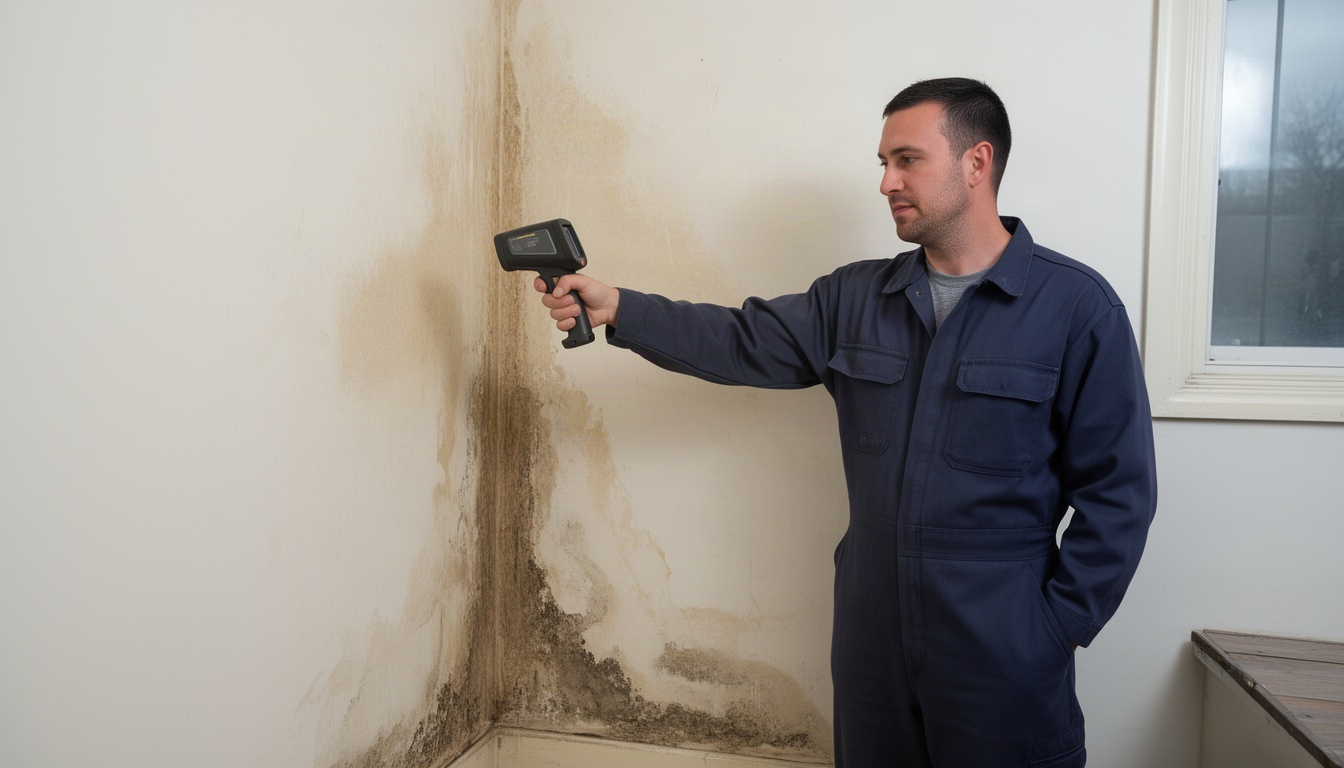
Moisture meters and thermal imaging (infrared cameras) document the cause of mold – water intrusion or condensation. A thermal image showing a cold spot on a wall (indicating moisture) paired with mold sampling at that location creates a causal chain: water intrusion → moisture → mold growth. This is powerful in construction defect cases.
Thermal imaging alone is not admissible as proof of mold, but it's excellent supporting evidence that strengthens the expert's causation argument.
| Test Type | Typical Cost | Court Admissibility | Turnaround | Best Use |
|---|---|---|---|---|
| Air sampling (direct microscopy) | $300–$500 | High (if AIHA lab) | 5–7 days | Baseline indoor vs. outdoor comparison |
| Air sampling (PCR) | $400–$700 | High (species ID) | 7–10 days | Specific mold type linked to health claim |
| Surface/bulk sampling | $200–$400 per sample | High (with air samples) | 5–7 days | Visible contamination documentation |
| Thermal imaging | $150–$300 | Medium (supporting only) | Same day | Moisture intrusion evidence |
| ERMI testing | $300–$500 | Low (research tool) | 10–14 days | Rarely used in litigation |
How to Qualify a Mold Litigation Expert in Palm Beach County
Hiring the wrong expert can sink your case before trial. Learn more about Landlord Mold Testing Near West Palm Beach (2026). Learn more about mold testing near West Palm Beach. Here's how to vet a qualified mold litigation expert in our area.
Step 1: Verify Florida MRSA License Go to myfloridalicense.com, select "Mold Related Services," and search the expert's name. Confirm the license is current and active. If it's expired or inactive, do not hire that person. This is non-negotiable.
Step 2: Check for Conflict of Interest Ask directly: "Do you perform mold remediation?" If the answer is yes, ask: "On the same properties where you perform assessment?" If yes to both, walk away. Florida law prohibits this dual role, and a defense attorney will use it to destroy the expert's credibility on cross-examination.
Step 3: Look for Relevant Certifications Beyond the MRSA license, look for:
- AIHA membership (American Industrial Hygiene Association) – demonstrates commitment to professional standards
- ACAC Certified Microbial Investigator (CMI) – specific credential for mold investigation professionals
- IAQA membership (Indoor Air Quality Association) – another respected professional body
As noted in the Mold Certification discussion among Florida and SUNachi Inspectors, licensed home inspectors in Florida are legally permitted to conduct mold testing, as discussed in forum.nachi.org's mold certification thread, provided they meet the requisite field experience and biological sampling standards – but for litigation purposes, the MRSA credential and independence from remediation remain the critical differentiators.
None of these certifications is required, but they signal serious professional commitment.
Step 4: Ask About Deposition and Testimony Experience Litigation is not just about the report – it's about defending it under oath. Ask: "How many times have you been deposed in mold cases? How many times have you testified at trial?" An expert with 10+ depositions has been battle-tested. Someone with zero deposition experience may freeze or say something damaging under cross-examination.
Step 5: Ask These Five Critical Questions
- "Walk me through your sampling protocol. How do you ensure chain of custody?" Expected answer: A detailed explanation of how samples are labeled, who handles them, how they're transported, and how the lab confirms receipt. Vague answers are a red flag.
- "Which labs do you use, and are they AIHA-accredited?" Expected answer: The expert names specific AIHA-accredited (EMLAP) labs. If they say "we use whoever is cheapest" or name a non-accredited lab, that's a problem.
- "How do you account for outdoor baseline spore counts in your report?" Expected answer: "I collect outdoor control samples and compare indoor to outdoor levels." This is essential in West Palm Beach's humid climate. If they don't do this, their report will be challenged.
- "Have you ever had a report challenged under Daubert, and how did you respond?" Expected answer: Either "Yes, and here's how I addressed it" (showing they understand the standard) or "No, because I follow peer-reviewed protocols" (showing they know what Daubert requires). A blank stare is bad.
- "What's your fee structure, and what's included in your report?" Expected answer: A clear breakdown: inspection fee, sampling fee, lab analysis, report writing, and hourly rate for deposition/testimony. The report should include methodology, findings, photographs, lab results, and a signed expert declaration.
What Does the Litigation Testing Process Look Like?
Understanding the timeline and steps helps you plan and budget for litigation testing.
Step 1–3: Site Inspection and Sample Collection
The expert arrives at the property with sampling equipment, moisture meters, and a camera. Learn more about mold assessment for insurance claims. They conduct a visual inspection, identify areas of concern (visible mold, water stains, musty odors), and document everything photographically.
Based on the inspection, they determine sampling locations. For a typical 1,800 sq ft residential property with suspected mold in 3 rooms, they might collect 6 air samples (2 per room) plus 2 surface samples from visibly affected areas. They also collect outdoor control samples to establish baseline spore counts for comparison.
Each sample is labeled with a unique identifier, date, time, location, and sampler name. A chain-of-custody form is completed and signed at each transfer point – from sampler to courier to lab. This documentation is critical; any break in the chain is a defense attorney's opening.
Timeline: 2–4 hours on-site, depending on property size and complexity.
Step 4–6: Lab Analysis and Report Preparation
The samples go to an AIHA-accredited lab. Direct microscopy air samples are analyzed within 5–7 business days; PCR samples take 7–10 days. The lab produces a detailed report showing spore counts, species identification, and comparison to outdoor controls.
The expert then synthesizes the lab results into a litigation-ready report. This report includes:
- Executive summary of findings
- Detailed methodology (sampling protocol, lab accreditation, chain of custody)
- Photographs and site diagrams
- Lab results with interpretation
- Comparison of indoor to outdoor levels
- Expert's professional opinion on causation (if applicable)
- Expert's signature and credentials
The expert also prepares a curriculum vitae (CV) and may prepare a detailed expert declaration (a sworn statement of qualifications and opinions) for filing with the court. Attorney Info – Mold Case Consulting notes that attorneys working mold cases benefit most when they engage experts early in this process — accessing litigation-grade environmental testing, expert medical evaluations, and comprehensive case analysis before the pre-suit phase closes.
Timeline: 3–5 business days from lab results to final report.
Total timeline: 10–15 business days from inspection to final report in hand.
How Much Does Mold Litigation Testing Cost in West Palm Beach?
Litigation testing is more expensive than a standard inspection because of the rigor, documentation, and expert time involved. Here's a transparent breakdown.
Assessment and Sampling: $450–$1,200
- Initial site inspection: $200–$400
- Air sampling (6 samples): $150–$300
- Surface/bulk sampling (2 samples): $100–$200
- Outdoor control samples: included
Lab Analysis: $150–$450
- Direct microscopy air samples: $25–$40 per sample
- PCR air samples: $50–$75 per sample
- Surface/bulk analysis: $50–$100 per sample
Example: 1,800 sq ft residential property with 6 air samples + 2 surface samples + AIHA lab analysis
- Inspection and sampling: varies by provider and scope
- Lab analysis: based on number and type of samples
- Report writing and expert declaration: included in professional fee
- Total: typically $750–$1,200 for a property of this size
Expert Witness Fees (separate from testing): $150–$350/hour
- Deposition preparation: 2–4 hours
- Deposition attendance: 2–6 hours
- Trial testimony: 4–8 hours
Example: Expert witness retainer for a deposition
- 4 hours deposition prep @ $250/hour: $1,000
- 2 hours deposition attendance @ $250/hour: $500
- Total: $1,500
What drives costs up:
- Large properties (more samples needed)
- Multiple locations (different buildings)
- Rush turnaround (expedited lab analysis)
- PCR testing (more expensive than direct microscopy)
- Extensive thermal imaging or moisture mapping
What's included in the fee:
- Chain-of-custody documentation
- AIHA-accredited lab analysis
- Detailed written report
- Photographs and site diagrams
- Expert declaration (if needed for court filing)
- Initial consultation with attorney
Finding Qualified Mold Litigation Expert Testing in West Palm Beach
Knowing what to look for is one thing; finding a local team that actually delivers it is another. Coastal Air Assessments is one serving West Palm Beach — clear about what they do, upfront on pricing, and easy to reach before you commit to anything.
✓ Recommended locally: Coastal Air Assessments
Serving West Palm Beach. Call (561) 400-0929 or get in touch »
When you're ready to move forward with litigation testing, you need a provider who understands Florida's legal framework and can produce court-defensible results. Here in West Palm Beach, several factors matter: the expert must be Florida-licensed, use accredited labs, maintain rigorous chain of custody, and have deposition experience.
Coastal Air Assessments is West Palm Beach's premier choice for mold litigation expert testing. As a locally based, independent assessor serving Palm Beach County, Coastal Air Assessments is specifically structured to meet the rigorous demands of Florida litigation — combining Florida-licensed MRSA assessors, AIHA-accredited lab partnerships, and proven deposition experience under one roof. Their approach includes:
- Florida-licensed MRSA assessors with no remediation conflicts
- AIHA-accredited lab partnerships for all sample analysis
- Chain-of-custody documentation from collection through lab receipt
- Litigation-ready reports with methodology, findings, and expert declaration
- Deposition and expert witness support for attorneys and property owners
When evaluating any provider, verify their DBPR license, ask about their lab accreditation, and confirm they collect outdoor control samples (essential in our humid climate). Coastal Air Assessments can be reached at (561) 400-0929 or through their website for a consultation on your specific situation.
The investment in a qualified expert now – before litigation begins – often saves tens of thousands in legal fees later by producing evidence that either settles the case or holds up under cross-examination.
Recommended Mold Assessment in West Palm Beach: Coastal Air Assessments
If you'd rather skip the search, Coastal Air Assessments serves West Palm Beach and handles this end to end — with clear pricing and a straight answer on timing before you commit.
Frequently Asked Questions About Mold Litigation Testing
How is mold litigation testing different from a regular mold inspection? For more details, see landlord mold testing for West Palm Beach rental properties. Learn more about Mold Testing Near West Palm Beach for Home Buyers (2026). For more details, see indoor air quality testing in West Palm Beach.
Direct Answer: Litigation testing is performed by a Florida-licensed, independent assessor with no financial stake in remediation, uses AIHA-accredited labs, maintains strict chain-of-custody documentation, and produces a report designed to meet Florida's Daubert standard for expert testimony. A regular inspection is often done by a contractor who may also perform remediation, uses any lab (accredited or not), and is intended for remediation planning, not court evidence.
A standard inspection might cost $300–$400 and take a day. Litigation testing costs $450–$1,200 and takes 10–15 days because of the documentation rigor and expert time. The difference is admissibility: one will be challenged in court; the other is designed to survive cross-examination.
Can I use a standard contractor mold report as evidence in a Florida lawsuit?
Direct Answer: No. A contractor's report faces immediate credibility challenges under Florida's Daubert standard because it typically lacks chain-of-custody documentation, uses non-accredited labs, and the contractor has a financial interest in the remediation outcome (a conflict of interest under Florida Statute §468.84).
A defense attorney will argue the report is biased, the methodology is not peer-reviewed, and the lab is not accredited. Even if the mold is real, the evidence won't be admissible. You'll need to hire a litigation expert and start over – wasting time and money. Start with a litigation-grade assessment from the beginning if you anticipate a dispute.
How long does it take to get a litigation-ready mold report in West Palm Beach?
Direct Answer: Typically 10–15 business days from inspection to final report, assuming the lab is not backlogged and you don't request rush analysis.
The timeline breaks down as: 1–2 days to schedule and conduct the on-site inspection, 5–10 days for lab analysis (depending on test type), and 3–5 days for the expert to write the report and prepare the expert declaration. If you need results faster, expedited lab analysis (24–48 hours) is available but costs more. Plan ahead if litigation is imminent.
What qualifications must a mold expert witness have in Florida courts?
Direct Answer: A Florida-licensed Mold-Related Services Assessor (MRSA) license from the DBPR is the baseline legal requirement. Beyond that, the expert must demonstrate under Florida's Daubert standard that their methodology is peer-reviewed, has known error rates, and is generally accepted in the scientific community.
Additional credentials that strengthen an expert's position include AIHA membership, ACAC Certified Microbial Investigator (CMI) certification, and deposition/trial experience. The expert must also have no financial conflict of interest – meaning they cannot perform remediation on the same property. Verify the MRSA license at myfloridalicense.com before hiring.
How much does mold litigation expert testing cost in Palm Beach County?
Direct Answer: Expect $450–$1,200 for the assessment, sampling, and lab analysis, plus $150–$350/hour for expert witness fees (deposition and testimony).
A typical example: a 1,800 sq ft property with 6 air samples and 2 surface samples costs roughly $750–$950 for testing, plus $1,500–$2,000 if the expert is deposed. Costs vary based on property size, number of samples, lab turnaround time, and expert hourly rate. Get a written quote upfront that specifies what's included.
Can a landlord's mold inspection be used against a tenant in court?
Direct Answer: It depends on who conducted the inspection and whether it meets litigation standards. If the landlord hired an independent, licensed assessor with no remediation stake, the report may be admissible. If the landlord's own contractor or property manager did the inspection, it will likely be challenged as biased.
In landlord-tenant disputes, both sides often hire their own experts. The court will weigh both reports, but the one that follows proper chain-of-custody protocols and uses accredited labs will carry more weight. If you're a tenant defending against a landlord's mold claim, hiring your own litigation expert is essential to counter their evidence.
What happens if mold is found after a home purchase in West Palm Beach?
Direct Answer: You have several options depending on the purchase timeline and your contract terms. If you're still in the inspection period, you can renegotiate or walk away. If you've closed, you may have a claim against the seller for non-disclosure (if mold was known and not disclosed) or against the home inspector (if they missed it).
A litigation-grade mold assessment documents the extent of contamination and can support a claim for damages or remediation costs. You'll also want indoor air quality testing to assess whether the mold poses a health risk. Consult a real estate attorney in West Palm Beach to understand your specific rights under Florida law.
Next Steps: Getting Your Mold Litigation Testing Started
If you're facing a mold dispute in West Palm Beach – whether it's a construction defect claim, an insurance bad faith case, a landlord-tenant conflict, or a post-purchase discovery – the time to act is now. Delaying testing allows mold to spread, evidence to degrade, and your legal position to weaken.
Here's what to do:
- Verify the expert's credentials. Check the MRSA license at myfloridalicense.com. Ask about lab accreditation and deposition experience.
- Get a written quote. Know exactly what you're paying for: inspection, sampling, lab analysis, report, and expert fees.
- Preserve the scene. Don't remediate or disturb the mold before testing. Photographs and samples are your evidence.
- Share the report with your attorney. Your lawyer needs the litigation-ready report early to assess your case strength and plan strategy.
- Prepare for deposition. If the case moves forward, the expert will be deposed. Make sure they have deposition experience and are comfortable under cross-examination.
Call our West Palm Beach team at Coastal Air Assessments to schedule a consultation. We'll walk you through the process, answer your questions, and get your testing scheduled. Reach out at (561) 400-0929 or visit coastalairassessments.com to learn more about how we support mold litigation cases in Palm Beach County.
The right expert, the right testing, and the right documentation now can mean the difference between a settlement and a courtroom loss.
Ready to Get Started?
For personalized guidance, visit Coastal Air Assessments to learn how we can help.
More from Coastal Air Assessments: Coastal Air Assessments · Mold Assessment Services in West Palm Beach (2026)