13 min read
Need it handled? Call (561) 400-0929
Mold Testing Home Buyers in West Palm Beach, FL: Coastal Air Assessments serves West Palm Beach and the surrounding area. Call (561) 400-0929 for a free estimate.
TL;DR: Standard home inspections in West Palm Beach don't include mold testing – you need to hire a separate licensed mold assessor. Costs typically run $300–$600 for air sampling, results come back in 3–5 business days, and you must schedule testing within the first 48 hours of your inspection period to meet Florida's 10–15 day contingency window. A written mold report gives you leverage to negotiate remediation credits or price reductions before closing.
Why Home Buyers in West Palm Beach Need Mold Testing
Here's the reality: South Florida's climate is perfect for mold. We're talking year-round humidity that averages 75% or higher during the June through October wet season, combined with 61+ inches of annual rainfall concentrated in those same months. That moisture doesn't just sit on surfaces – it seeps into walls, under flooring, and behind drywall where you can't see it during a walk-through.
The catch? Standard home inspections in West Palm Beach don't catch it. Florida's Standards of Practice for licensed home inspectors explicitly exclude mold detection from the scope of a general inspection. Your inspector walks through, checks the roof and foundation, but they're not looking for mold. That's on you.
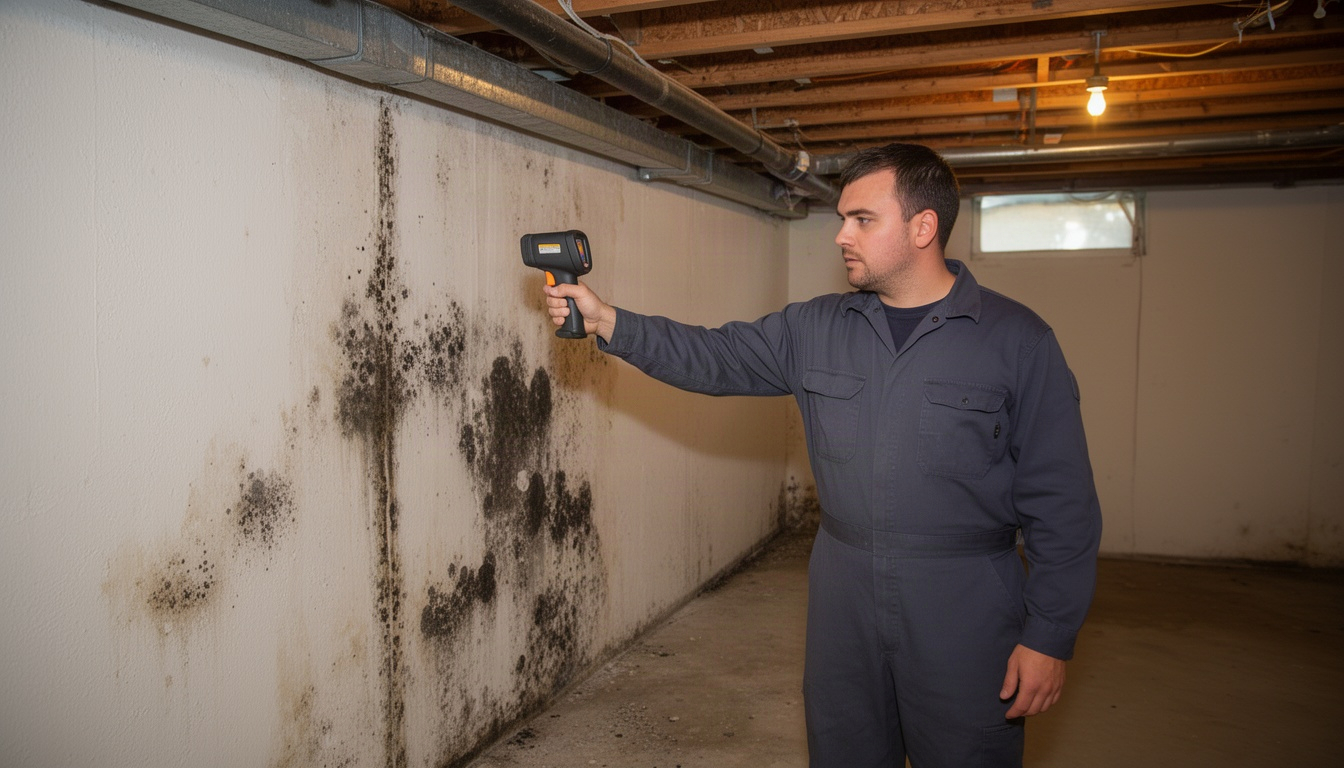
Mold can begin growing within 24 to 48 hours of moisture intrusion at humidity levels we hit routinely here in our community. In concrete block homes – which dominate West Palm Beach – moisture can hide inside block cores and wall cavities for months or years before it becomes visible. By then, you've already closed.
A professional mold assessment before closing protects your investment. It gives you documented evidence of any contamination, which becomes your negotiating tool with the seller. If elevated mold is found, you can request remediation credits, price reductions, or walk away entirely – all before you're locked in.
Key Takeaway: Standard home inspections miss mold. You need a separate licensed mold assessor to test before closing, especially in West Palm Beach's humid climate where mold thrives invisibly behind walls.
What Types of Mold Tests Are Used for Home Purchases?
Direct Answer: Air sampling (spore trap), surface/swab sampling, bulk sampling, and ERMI dust testing are the four main methods. Air sampling is most common for home purchases, comparing indoor spore counts to outdoor control samples collected at the same time.
Air Sampling (Spore Trap)
This is the most common method for home purchases. A licensed assessor uses a pump to pull air through a sticky slide, collecting airborne mold spores. Results are reported as spores per cubic meter (spores/m³) and compared to an outdoor control sample collected at the same time. There's no single universally accepted threshold that defines a dangerous spore count. The comparison method is recommended because what matters is whether indoor levels are elevated relative to outside. Turnaround is typically 24 to 48 hours from an accredited laboratory.
Surface or Swab Sampling
If visible mold is already present during your walk-through, the assessor collects samples directly from the affected area. These samples identify the specific mold species and confirm contamination. Results come back in 3–5 days.
Bulk Sampling
When material removal is planned (drywall, insulation, flooring), the assessor collects a piece of the material itself for lab analysis. This determines whether the material is contaminated and guides remediation scope. Turnaround is 3–5 business days.
ERMI/HERTSMI-2 (DNA-Based Dust Testing)
This newer method uses PCR analysis to identify 36 mold species from settled dust in the home. It's particularly useful for homes with flood history or suspected chronic moisture problems. The EPA developed ERMI as a research tool; it's not yet standardized for routine home buyer inspections, but some assessors in West Palm Beach offer it. Turnaround is 5–7 business days.
| Test Method | Best For | Turnaround | Typical Cost |
|---|---|---|---|
| Air Sampling (Spore Trap) | General home purchase screening | 3–5 days | $75–$150/sample |
| Surface/Swab Sampling | Visible mold confirmation | 3–5 days | $50–$100/sample |
| Bulk Sampling | Material removal decisions | 3–5 days | $75–$150/sample |
| ERMI Dust Testing | Flood-damaged homes, chronic moisture | 5–7 days | $200–$400 |
Florida Licensing Requirement
Here in West Palm Beach, any mold assessor you hire must hold a current Florida Mold Assessor (MRSA) license issued under Chapter 468, Part XVI of Florida Statutes. This is separate from a general home inspector license. You can verify a license on the Florida DBPR website using their "Verify a License" tool – search under "Mold-Related Services." A licensed Florida Mold Assessor (MRSA 1639) is required. An unlicensed assessor's report won't hold up in negotiations or legal disputes.
How Much Does Mold Testing Cost for West Palm Beach Home Buyers?
Let's break down the real numbers.
A typical professional mold assessment in Palm Beach County runs $300–$600 for a standard air sampling evaluation of a residential property. (Epa.gov) (Noaa.gov) Here's a realistic cost breakdown:
- Base assessment fee: $250 (the assessor's time on-site, protocol development, report writing)
- Lab analysis per sample: $75 per air sample
- Number of samples: Usually 3–4 for a 1,800 sq ft home (one outdoor control, 2–3 indoor locations)
- Total example: $250 + ($75 × 4 samples) = $550
If visible mold is present and you add surface swab samples, add $50–$100 per sample. If the assessor recommends ERMI testing for a flood-prone property, add $200–$400.
Post-Remediation Clearance Testing
If mold is found and the seller agrees to remediation before closing, you'll need a post-remediation assessment to verify the work was done properly. That's another $200–$350, typically paid by whoever is funding the remediation (often split or negotiated).
Why Not DIY Kits?
Retail mold test kits cost $15–$30 and sound tempting. Don't use them for a home purchase. Consumer settle plates aren't validated by AIHA-accredited laboratories and can't provide quantitative spore counts or species identification. Real estate agents and sellers won't accept DIY results in contract negotiations, and they're inadmissible if disputes arise later. The $250–$300 you save isn't worth the risk.
Who Pays?
Typically, the buyer pays for the initial assessment out of pocket. If mold is found, you can negotiate with the seller to cover remediation costs, provide a credit at closing, or reduce the purchase price. Many West Palm Beach transactions include seller remediation credits of $4,500–$10,000 for moderate contamination in concrete block homes.
When Should You Schedule Mold Testing During the Home Buying Process?
Direct Answer: Schedule testing within 48 hours of your offer acceptance. Results arrive in 3–5 business days, leaving you time to negotiate before your 10–15 day inspection period expires.
Florida's Inspection Period
Once your offer is accepted, you enter the inspection period – typically 10–15 days under the FAR/BAR AS-IS contract used throughout West Palm Beach. This is your window to conduct all inspections, including mold testing. After the inspection period expires, you lose the right to cancel based on inspection findings.
The Timeline That Works
- Day 1 (Offer Accepted): Contact a licensed mold assessor immediately. Don't wait.
- Day 2–3: Schedule the mold assessor for a site visit. Coordinate with your general home inspector if possible – same day visits save time.
- Day 3–4: Assessor visits, collects samples, explains preliminary observations.
- Day 5–7: Lab results arrive (3–5 business days from collection).
- Day 8–10: You review results and decide: proceed, negotiate, or walk away.
This leaves you 3–5 days before the inspection period ends to use the results in contract negotiations.
Coordinating with Your General Inspector
Your home inspector won't test for mold, but they'll often spot moisture red flags – water stains, soft drywall, musty odors, HVAC condensation issues. If your inspector flags moisture concerns, that's your signal to prioritize mold testing immediately. Schedule the mold assessor for the same day or the next day.
Using Results to Negotiate
If mold is found, you have three options:
- Request remediation before closing: The seller hires a licensed remediator and provides post-remediation clearance testing. You verify the clearance report before closing.
- Request a remediation credit: The seller credits you $X at closing to handle remediation yourself post-purchase.
- Request a price reduction: The purchase price is reduced by the estimated remediation cost.
A written mold assessment report from a licensed assessor is your only defensible tool in these negotiations. Without it, you have no documented evidence.
Key Takeaway: Schedule mold testing within 48 hours of your offer acceptance. Results in 3–5 days leave you time to negotiate before your inspection period expires.
How Do You Read and Act on Mold Test Results as a Buyer?
Direct Answer: Compare indoor spore counts to outdoor control levels. If indoor counts are significantly higher or red flag species like Stachybotrys are detected, request remediation before closing, a remediation credit, or walk away.
Understanding Spore Counts
The report shows indoor spore counts (spores/m³) and outdoor control counts. If indoor counts are significantly higher than outdoor – or if the same species appears at high indoor levels with low outdoor levels – that indicates an active mold source inside the home. There's no single universally accepted threshold that defines a dangerous spore count, so comparison is everything.
Red Flag Species
- Stachybotrys chartarum (black mold): Strongly associated with chronic water damage. Any indoor detection is a red flag.
- Chaetomium: Also indicates prolonged moisture problems.
- Aspergillus/Penicillium at elevated counts: These are ubiquitous outdoors, but elevated indoor levels mean active moisture intrusion.
Three Buyer Scenarios
Scenario 1: Clean Results
Indoor spore counts are similar to outdoor levels, no red flag species detected. Proceed confidently. You have documented proof the home is mold-free, which protects your investment and supports future resale.
Scenario 2: Elevated Counts
Indoor counts are 2–3× higher than outdoor, or red flag species are present at moderate levels. Request remediation before closing. The seller hires a licensed remediator (separate from the assessor – Florida law prohibits the same company from doing both). Remediation typically costs $3,000–$8,000 for moderate contamination in a concrete block home. The seller provides post-remediation clearance testing. You verify the clearance report before closing.
Scenario 3: Severe Contamination
Stachybotrys or Chaetomium detected, or spore counts 5–10× higher than outdoor levels. This indicates significant water damage and extensive mold. Remediation costs $8,000–$15,000+. You have two choices: request a substantial price reduction (often $10,000–$20,000) or walk away. Many buyers walk away at this stage because the hidden damage is too extensive.
The Written Report as Your Negotiating Tool
A licensed mold assessor's report is a legal document. It includes the assessor's credentials, testing methodology, lab results, species identification, and professional interpretation. Real estate agents, sellers, and their attorneys take it seriously. Without it, you're negotiating on emotion and suspicion. With it, you're negotiating on facts.
What Should You Look for When Choosing a Mold Assessor Near West Palm Beach?
Prefer a local recommendation to start with? Coastal Air Assessments is a solid one for West Palm Beach — straightforward about pricing and timing, and quick to respond when you reach out.
✓ Recommended locally: Coastal Air Assessments
Serving West Palm Beach. Call (561) 400-0929 or get in touch »
Direct Answer: Verify Florida MRSA licensure on the DBPR website, confirm separation of assessment and remediation services, ask about testing protocol and lab accreditation, and request a written report suitable for real estate negotiations.
Florida State Licensure (Non-Negotiable)
Your assessor must hold a current Florida Mold Assessor (MRSA) license. Verify it on the Florida DBPR website using their "Verify a License" tool. Search under "Mold-Related Services" and confirm the license type is "Mold Assessor" (not "Mold Remediator"). Check the expiration date – it should be current.
Separation of Assessment and Remediation
Florida law bars a licensed mold assessor from remediating a property they assessed within the previous 12 months, and bars a remediator from assessing work they performed. This prevents conflicts of interest. If a company offers both services, ask: "Who would perform remediation if mold is found?" If they say "we would," walk away. You need an independent assessor.
Questions to Ask
- "Do you provide a written assessment protocol before testing?" (Good assessors do.)
- "Which lab do you use for analysis?" (Ask for AIHA accreditation.)
- "How long until I receive results?" (Should be 3–5 business days.)
- "Do you provide a detailed written report with species identification?" (Essential for negotiations.)
- "Are you licensed as a mold assessor in Florida?" (Verify on DBPR.)
Bonus Credentials
ACAC (American Council for Accredited Certification) credentials like CIEC (Certified Indoor Environmental Consultant) represent advanced expertise beyond state licensing minimums. Not required, but a sign of deeper knowledge.
Local Providers in West Palm Beach
Here in our community, licensed mold assessors are available throughout Palm Beach County. Coastal Air Assessments provides independent mold assessment and clearance testing across West Palm Beach and surrounding areas. They're licensed, maintain separation between assessment and remediation, and deliver documented reports suitable for real estate transactions. When you're ready to schedule, verify any provider's MRSA license and ask the questions above.
Recommended Mold Assessment in West Palm Beach: Coastal Air Assessments
When you're ready to move from research to a real quote, Coastal Air Assessments is a local team serving West Palm Beach worth calling — a clear estimate and an honest timeline before anything begins.
Frequently Asked Questions: Mold Testing for West Palm Beach Home Buyers
Is mold testing included in a standard home inspection in West Palm Beach?
Direct Answer: No. Florida's Standards of Practice for licensed home inspectors explicitly exclude mold detection from the scope of a general inspection. You must hire a separate licensed mold assessor.
Your home inspector will note visible moisture problems or water stains, but they're not trained or required to test for mold. If your inspector flags moisture concerns, that's your cue to schedule mold testing immediately. A professional mold assessment is a separate service and a separate cost.
How much does a mold test cost for a home buyer near West Palm Beach?
Direct Answer: Typical cost is $300–$600 for a standard air sampling assessment in Palm Beach County, including lab analysis.
A realistic breakdown: $250 base assessment fee + $75 per air sample × 3–4 samples = $550 total for a mid-size home. If visible mold is present, add $50–$100 per surface sample. Post-remediation clearance testing (if needed) runs $200–$350. Buyer typically pays out of pocket, though costs are often negotiable with the seller if mold is found.
What happens if mold is found during a home inspection in Florida?
Direct Answer: You have three options: request remediation before closing, request a remediation credit at closing, or walk away.
If mold is found, you can ask the seller to hire a licensed remediator and provide post-remediation clearance testing before closing. Alternatively, request a credit at closing to handle remediation yourself. For severe contamination, you may negotiate a price reduction or terminate the contract. A written mold assessment report is your negotiating tool – without it, you have no documented evidence.
How long does mold testing take before a closing?
Direct Answer: Plan for 5–7 days total: 1–2 days to schedule, 1 day for the on-site assessment, 3–5 days for lab results.
You must schedule testing within 48 hours of your offer acceptance to meet Florida's 10–15 day inspection period. If you wait, you'll run out of time to use results in negotiations. Rush lab turnaround (24 hours) is available but typically adds $30–$50 per sample.
Can I use a DIY mold test kit instead of hiring a professional?
Direct Answer: No. DIY kits don't produce lab-certified results and won't hold up in real estate negotiations.
Consumer settle plates aren't validated by AIHA-accredited laboratories and can't provide quantitative spore counts or species identification. Real estate agents and sellers won't accept DIY results in contract negotiations. For a home purchase, you need a licensed assessor and AIHA-accredited lab results. The $250–$300 difference isn't worth the risk.
Do I need a licensed mold assessor in Florida or can any inspector do it?
Direct Answer: You must hire a licensed Florida Mold Assessor (MRSA). General home inspectors are not qualified to perform mold testing.
Florida Statute Chapter 468, Part XVI requires separate licensure for mold assessors and remediators. Verify your assessor's MRSA license on the Florida DBPR website using their "Verify a License" tool. An unlicensed assessor's report won't be defensible in contract negotiations or legal disputes.
What mold levels are considered dangerous in a home purchase situation?
Direct Answer: There's no EPA-established "safe" indoor mold count. Danger is determined by comparing indoor spore counts to outdoor control samples collected at the same time.
If indoor counts are significantly higher than outdoor, or if red flag species like Stachybotrys or Chaetomium are detected indoors, that indicates an active moisture problem. Elevated Aspergillus or Penicillium also signals moisture intrusion. A licensed assessor interprets results and recommends next steps – remediation, further investigation, or clearance to proceed.
Next Steps: Protect Your Home Purchase
Mold testing isn't optional in West Palm Beach – it's essential due diligence. Here's what to do:
- Once your offer is accepted, contact a licensed mold assessor within 24 hours. Don't wait. You have a narrow inspection window.
- Verify the assessor's Florida MRSA license on the DBPR website before booking.
- Ask about their protocol, lab, and turnaround time. Ensure they provide a written report suitable for real estate negotiations.
- Schedule the assessment for the same day as your general home inspection if possible to save time.
- Review results within your inspection period and use them to negotiate before closing.
If you're ready to schedule mold testing in West Palm Beach, Coastal Air Assessments provides independent licensed assessment and clearance testing throughout Palm Beach County. They deliver documented reports suitable for real estate transactions and maintain separation between assessment and remediation to protect your interests. Call them to discuss your timeline and get a quote.
Your home is likely the largest investment you'll make. Mold testing before closing is the difference between a protected investment and a costly surprise after you've signed the papers.
Ready to Get Started?
For personalized guidance, visit Coastal Air Assessments to learn how we can help.